What are skin boosters?
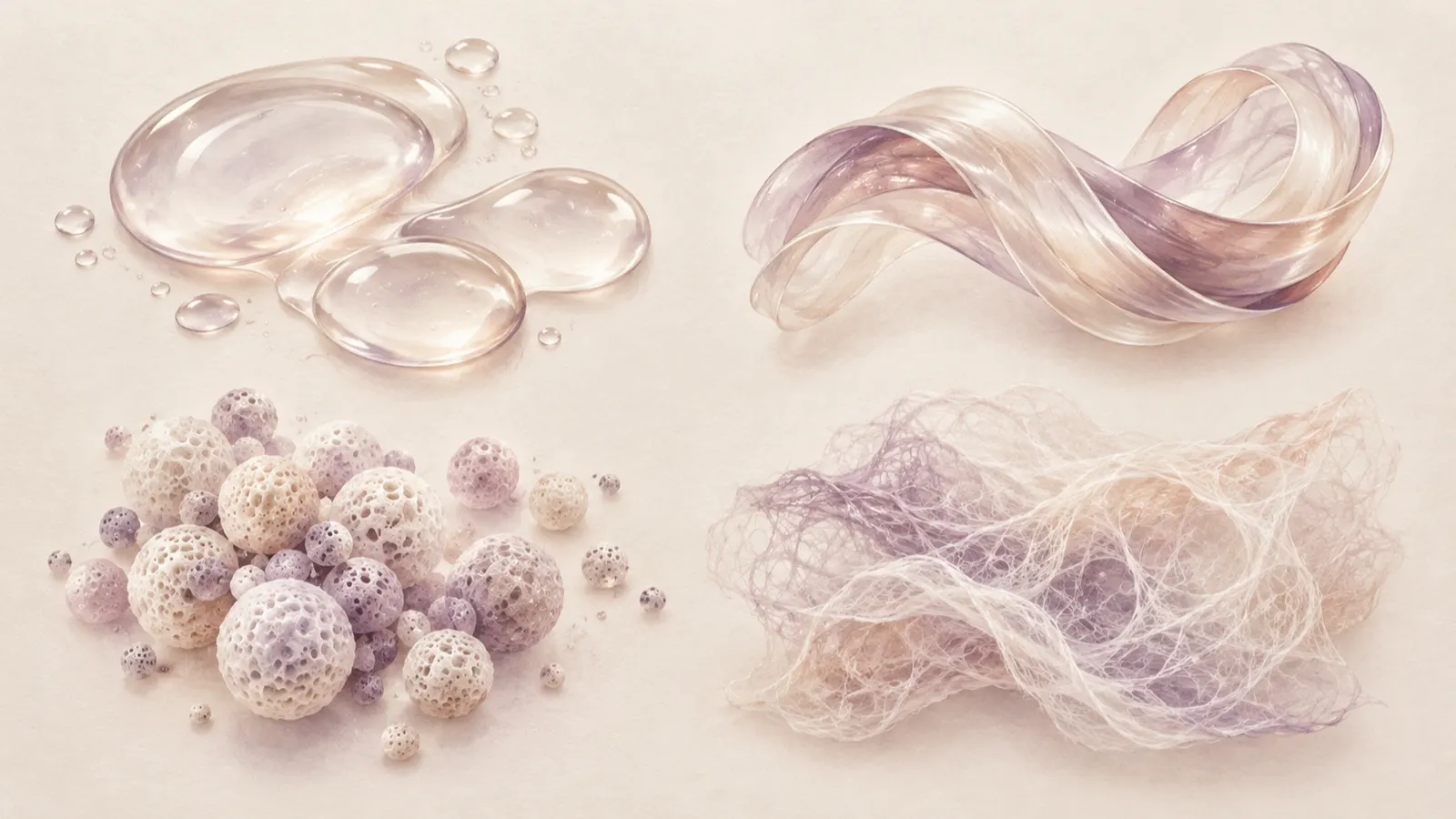
Skin boosters are injectable products spread in small amounts through the skin to improve texture, hydration and fine lines. The families you will meet in Korea are hyaluronic acid (HA), polynucleotides (PN), PDLLA and PLLA collagen stimulators, and newer tissue-derived matrices. Several are dermal fillers in the regulatory sense but are used for skin quality rather than contour; botulinum toxin works differently, by reducing muscle activity. Each family has a different evidence base.
Written by the Seoul Skin Boosters editorial team and medically reviewed by a Korean Board-Certified Dermatologist (AAD International Fellow · ASLMS member). Last reviewed: .
Is “skin booster” a medical category?
No. It is a clinic and marketing term. Regulators classify each product by what it is made of and what it is licensed to do. In Korea’s MFDS medical device database, Rejuran is a Class 4 “tissue-repair biomaterial” and Juvelook a Class 4 “tissue-repair material” (checked 18 October 2026). In the United States, SKINVIVE and Sculptra are both filed as “implant, dermal, for aesthetic use” with premarket approval (SKINVIVE record, Sculptra record).
The practical lesson: the word “booster” on a price list tells you little. Ask for the product name, the amount in cc or vials, and what its licence covers.
Which types of skin booster are there?
Hyaluronic acid boosters
Hyaluronic acid is a sugar molecule that holds water in the skin. Booster versions are thinner than volumising fillers. SKINVIVE is a cross-linked HA gel with lidocaine, placed in tiny droplets in the skin; in its main trial, 57.9% of treated adults improved by at least one grade on a cheek smoothness scale at one month, against 4.5% of untreated controls [1]. Profhilo combines high- and low-molecular-weight HA in stable complexes made by a heat process rather than chemical cross-linkers [2].
Polynucleotide (PN) boosters
Polynucleotides are purified DNA fragments; Rejuran’s come from salmon. PN is easily confused with PDRN, a related ingredient made of shorter fragments that acts mainly through adenosine receptors, while PN’s longer chains are linked to extracellular matrix support [3]. In a split-face trial of 27 adults treated around the eyes, PN and non-cross-linked HA scored similarly overall, with PN showing higher improvement rates for elasticity and hydration [4].
PDLLA and PLLA collagen stimulators
Polylactic acid particles prompt the skin to lay down new collagen over weeks to months. Juvelook pairs porous PDLLA particles with hyaluronic acid; Sculptra uses poly-L-lactic acid (PLLA). In Sculptra’s cheek-wrinkle trial, 71.6% of treated adults met the response goal at 12 months, against 26.1% of controls [5]. Strictly, these are biostimulators rather than boosters, but Korean price lists, including Delight Dermatology Clinic’s, group Juvelook with skin boosters.
Tissue-derived and multi-ingredient products
Elravie Re2O is made from micronised human acellular dermal matrix; in a 20-person split-face trial, Re2O combined with a hyaluronic acid booster improved skin density, elasticity and hydration more than the hyaluronic acid booster alone over 20 weeks [6]. NCTF 135 HA, nicknamed the “Chanel injection” in Korea, is a hyaluronic acid solution with vitamins and amino acids [7]. Exosome preparations are discussed separately in Juvelook vs exosomes.
| Family | Example | How the effect builds | Typical role |
|---|---|---|---|
| Hyaluronic acid | SKINVIVE, Profhilo | Water-binding gel, effect visible early | Smoothness, hydration |
| Polynucleotide | Rejuran | Gradual, over a course of sessions | Skin quality, thin skin, scars |
| PDLLA or PLLA | Juvelook, Sculptra | Collagen builds over weeks to months | Fine lines, gradual support |
| Tissue matrix | Elravie Re2O | Gradual, over a course of sessions | Density, texture |
Skin booster vs Botox: what is the difference?
Botulinum toxin (Botox is one brand) is a medicine injected into specific muscles to reduce the movement that creases the skin, such as frown lines and crow’s feet. A skin booster does not relax muscles; it changes the skin itself. The two answer different questions, which is why they are often combined: toxin for lines that appear when you move, a booster for texture, dryness and fine lines at rest.
| Skin booster | Hyaluronic acid filler | Botulinum toxin | |
|---|---|---|---|
| Acts on | Skin quality | Volume and contour | Muscle movement |
| Where it goes | Many small deposits in or just under the skin | Larger deposits at chosen points | Into selected muscles |
| What you notice | Smoother, more even skin | Fullness or lift | Softer expression lines |

Sculptra vs skin boosters: where do collagen stimulators fit?
Sculptra is used mainly for wrinkles and gradual volume loss, with a series of sessions a month apart; it is not a hydration booster. Korean PDLLA products blur the line: standard Juvelook is used as a booster, while Juvelook Volume carries four times as much PDLLA for deeper support. The trade-offs are covered in Sculptra vs Rejuran.
What are the risks of skin boosters?
Most side effects are local and short-lived: redness, swelling, small bumps at the injection points and bruising. In a 15-person split-face study, Rejuran i left raised bumps after 56.7% of sessions and redness after 60%, against 13.3% and 40% for a second polynucleotide product with adjusted pH and ionic strength [8]. After SKINVIVE, redness, swelling and lumps were the most common reactions, and most resolved within three days [9].
Rare events matter more. A systematic review of collagen stimulators found two confirmed reports of visual loss after PLLA and one after a PDLLA-HA product, a complication of accidental injection into a blood vessel [10]. With PLLA, papules and nodules have been tied to how the product is mixed and injected [11]. Choose an injector who can explain how a vascular problem would be recognised and treated on the day.
Do skin boosters add volume?
Mostly not. Hyaluronic acid and polynucleotide boosters are spread thinly to improve skin quality. Higher-dose collagen stimulators such as Juvelook Volume or Sculptra are used when gradual support is the aim.
How many skin booster sessions are usual?
Can a skin booster be combined with Botox?
Yes, the two are often planned together because they act on different things. In a survey of 501 Korean dermatologists, polynucleotide injections were frequently combined with botulinum toxin, fillers and energy-based devices [12].
References
Bibliographic records retrieved from PubMed (U.S. National Library of Medicine).
Alexiades M, Palm MD, Kaufman-Janette J, et al. A Randomized, Multicenter, Evaluator-blind Study to Evaluate the Safety and Effectiveness of VYC-12L Treatment for Skin Quality Improvements. Dermatol Surg. 2023;49(7):682-688.
PubMed: 37163665Cassuto D, Delledonne M, Zaccaria G, et al. Safety Assessment of High- and Low-Molecular-Weight Hyaluronans (Profhilo®) as Derived from Worldwide Postmarketing Data. Biomed Res Int. 2020;2020:8159047.
PubMed: 32685528Kim ST. Comparison of Polynucleotide and Polydeoxyribonucleotide in Dermatology: Molecular Mechanisms and Clinical Perspectives. Pharmaceutics. 2025;17(8).
PubMed: 40871045Lee YJ, Kim HT, Lee YJ, et al. Comparison of the effects of polynucleotide and hyaluronic acid fillers on periocular rejuvenation: a randomized, double-blind, split-face trial. J Dermatolog Treat. 2022;33(1):254-260.
PubMed: 32248707Fabi S, Hamilton T, LaTowsky B, et al. Effectiveness and Safety of Sculptra Poly-L-Lactic Acid Injectable Implant in the Correction of Cheek Wrinkles. J Drugs Dermatol. 2024;23(1):1297-1305.
PubMed: 38206151Lee YI, Chau NH, Nguyen NH, et al. Injectable Particulated Human Acellular Dermal Matrix Booster for Skin Restoration: An Integrated Randomized, Split-Face, Double-Blinded Clinical Trial and Preclinical Study. Int J Mol Sci. 2026;27(5).
PubMed: 41828422Fanian F, Deutsch JJ, Bousquet MT, et al. A hyaluronic acid-based micro-filler improves superficial wrinkles and skin quality: a randomized prospective controlled multicenter study. J Dermatolog Treat. 2023;34(1):2216323.
PubMed: 37577796Jeon W, Park M, Kim SW, Kim J. Efficacy of Ionization-Adjusted PN Filler in Minimizing Injection Pain: A Randomized, Patient-Blinded, Split-Face Study. Aesthetic Plast Surg. 2026;50(7):2723-2730.
PubMed: 41361144Chiu A, Montes JR, Munavalli G, et al. Improved Patient Satisfaction With Skin After Treatment of Cheek Skin Roughness and Fine Lines With VYC-12L: Participant-Reported Outcomes From a Prospective, Randomized Study. Aesthet Surg J. 2023;43(11):1367-1375.
PubMed: 37074002Young SM, Goh ASC, Jeyabal P, Ooi ASH. Visual Loss in Biostimulator Injectables: A Review of Incidence, Risk Factors, Etiology and Management Proposal. Aesthetic Plast Surg. 2026;50(5):1994-2005.
PubMed: 41263987Narins RS. Minimizing adverse events associated with poly-L-lactic acid injection. Dermatol Surg. 2008;34 Suppl 1:S100-4.
PubMed: 18547172Rho NK, Han KH, Goo BL, Kim HS. Real-World Use of Polynucleotide Injections in Scar Prevention and Management: A Nationwide Survey of Korean Society for Anti-Aging Dermatology (KAAD) Dermatologists. J Cosmet Dermatol. 2026;25(5):e70887.
PubMed: 42087414