Hyperdilute Radiesse: what diluting it changes, and the décolleté trial behind it
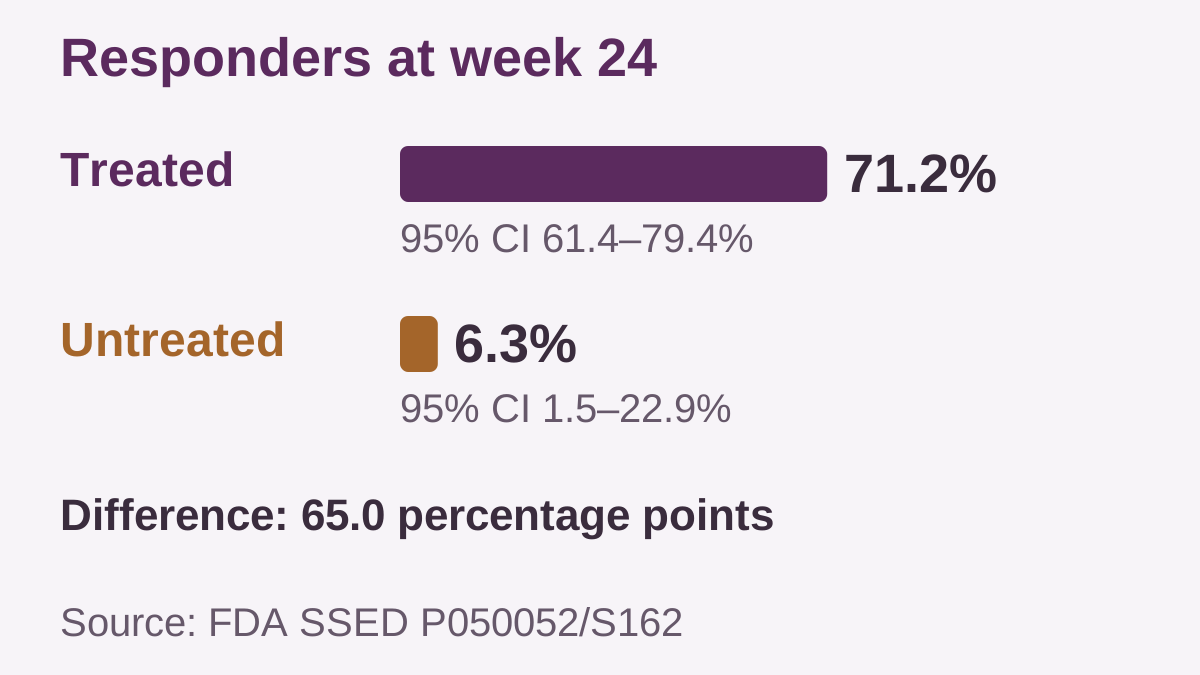
Hyperdilute Radiesse is calcium hydroxylapatite thinned with saline so that it spreads over a wide area as a skin-quality treatment, with less immediate volumising effect.[1] In a trial of 152 women with moderate to severe wrinkles of the décolleté, 71.2% of treated women were one grade or more better at week 24, against 6.3% of untreated controls (FDA summary P050052/S162, notice dated 31 March 2026, opened 1 November 2026).
Product notes compiled by the Seoul Skin Boosters editors. Editorially updated: .
What does diluting Radiesse change?
Undiluted, calcium hydroxylapatite microspheres give immediate structural support and act as a scaffold for new collagen.[2] Hyperdilution reduces the immediate volumising effect and helps the product spread and reach fibroblasts, so the emphasis moves to new collagen, elastin and remodelling of the surrounding matrix over large treatment areas.[1] The particles themselves stay the same: calcium hydroxylapatite of 25 to 45 microns in a gel of glycerin and carboxymethylcellulose (FDA summary, device description). How Radiesse compares with poly-L-lactic acid is set out in Radiesse vs Sculptra.
Who was in the décolleté trial?
The trial enrolled 152 women aged 32 to 65 with moderate to severe décolleté wrinkles at nine sites and randomly assigned them 3 to 1: 116 were treated with diluted Radiesse in a central area of the décolleté that kept off breast tissue, and 36 had no treatment until week 24. A blinded evaluator, not present at treatment visits, rated wrinkles at rest; a responder was one grade or more better than at the start. The main result was measured at week 24, and treated women were followed to week 84 (FDA summary, section X).
What did the trial find?
At week 24, 71.2% of treated women were responders (95% CI 61.4–79.4%), against 6.3% of untreated controls (1.5–22.9%), a difference of 65.0 percentage points. That primary analysis covered all 152 women and estimated missing ratings by multiple imputation; counting only the 95 treated women with an observed rating at week 24, the rate was 72.6%. By skin type, 70.6% of women with Fitzpatrick types I to III and 77.8% with types IV to VI were responders, although the trial was not designed to compare subgroups (FDA summary, effectiveness results).
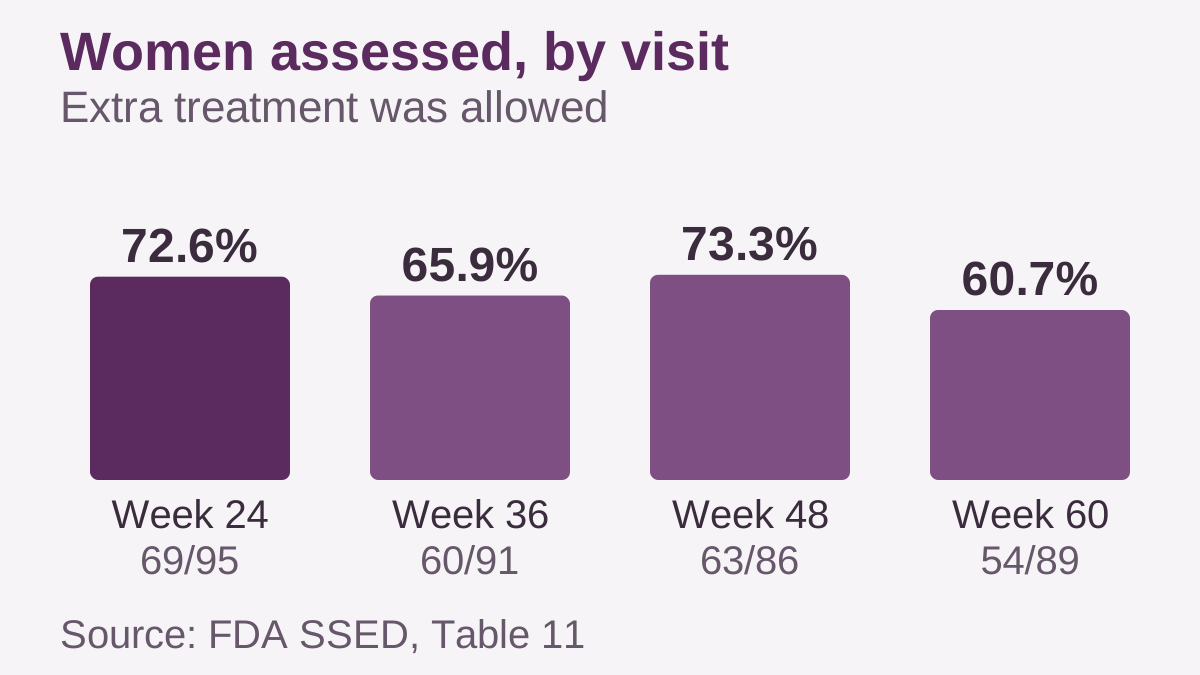
Later visits counted the treated women who were assessed, measured in weeks after the first injection. At week 60, 54 of the 89 women assessed met the response threshold; additional treatment was allowed during follow-up. The rates at weeks 36 and 48 were 65.9% and 73.3% (FDA summary, Table 11).
What side effects did the trial record?
Investigators recorded treatment-related adverse events in 11.7% of treated women (16 of 137): bruising at the injection site in 5.1%, discoloration in 2.9%, a lump in 2.2% and pain in 2.2%. None was severe or began late, and all resolved without lasting effects. Separately, women kept diaries of expected local reactions such as redness, bruising, discomfort, lumps or bumps, swelling, discoloration and itching; these were mostly mild or moderate and mostly settled within two weeks. In 71 women whose mammograms or breast ultrasound were reviewed after treatment, the diluted product did not show up on the images or interfere with them (FDA summary, safety results).
What about the neck, arms and other areas?
The trial above studied the décolleté only. A 2026 review describes consensus recommendations and emerging data for laxity at other sites, including the buttocks, arms and abdomen.[1] On the face, a chart review of 22 patients treated with hyperdilute calcium hydroxylapatite found more cheek volume and less jowl volume, nasolabial fold depth and marionette line depth on 3D imaging at day 150; it had no comparison group.[3] A Seoul procedure page sets out a hyperdilute protocol for the neck and chest.
What is hyperdilute Radiesse?
Radiesse, a calcium hydroxylapatite injectable, thinned with saline so that it spreads as a skin-quality treatment with less immediate volumising effect.[1]
How well did diluted Radiesse work on the décolleté?
In a trial of 152 women, 71.2% of treated women improved by at least one grade at week 24, against 6.3% of untreated controls. At week 60, 54 of the 89 women assessed met the response threshold; additional treatment was allowed during follow-up (FDA summary P050052/S162).
What side effects does diluted Radiesse cause?
In the décolleté trial, investigators recorded a treatment-related adverse event in 11.7% of treated women, most often bruising; none was severe and all resolved (FDA summary P050052/S162).
References (3)
Bibliographic records retrieved from PubMed (U.S. National Library of Medicine).
Soza GM. Hyperdilute Calcium Hydroxylapatite for Skin Quality and Contour: Clinical Applications, Technique, and Practical Considerations. Dermatol Clin. 2026;44(3):443-451.
PubMed: 42303355Somenek MT. Biostimulatory Injectables for Collagen Stimulation. Facial Plast Surg. 2026;42(5):601-606.
PubMed: 42297014Durairaj KK, Yambao M, Linnemann-Heath J, Dhiman A. Sculpting the Midface and Lower Face: A Novel Biostimulatory Technique Using Hyperdilute Calcium Hydroxylapatite. Aesthet Surg J Open Forum. 2025;7:ojaf104.
PubMed: 41376672